

How to Save on Groceries in Late Spring: 8 Strategies That Actually Work
The Grocery Store Is Not Your Friend Right Now
You know what… I went to the store last week and spent $67 on what felt like almost nothing. A few proteins, some produce, pantry staples. Sixty-seven dollars. Gone.
If you’re anything like me, you’ve been watching grocery prices creep up for the past couple of years and wondering when it’s going to level off. The honest answer is: don’t hold your breath.
What we can do, though, is get smarter about how we shop. Not cutting out things we love, not eating sad food to save a dollar. Just shopping with a strategy to save on groceries instead of just a list.
Here are eight things I actually do that keep my grocery bill from getting completely out of hand.
Let’s get into it.
The average American household throws away between $1,500 and $1,800 worth of food every year. That’s not a grocery budget problem. That’s a planning problem. The good news: planning is something you can fix starting this week, for free.
Why Late Spring Is a Smart Time to Reset Your Grocery Habits
LATE SPRING BRINGS CHEAPER PRODUCE, LIGHTER MEALS, AND A NATURAL OPENING TO RETHINK HOW YOU’VE BEEN SHOPPING ALL WINTER.
Winter grocery habits tend to be expensive. We buy heavier ingredients, more pantry staples, more comfort food items that add up fast. Spring changes what’s available, what’s affordable, and honestly what we feel like eating.
This is the window to reset. Seasonal produce is coming in cheaper. Grills are back out, which means simpler meals. And the post-holiday budget damage from winter is (hopefully) behind us.
Here’s how to take full advantage.
Disclosure: This post may contain affiliate links, which means I may receive a small commission if you make a purchase through my links — at no extra cost to you. I only recommend tools and products I personally use and trust.
8 Specific Ways to Spend Less at the Grocery Store This Spring
THESE ARE NOT VAGUE SUGGESTIONS – THESE ARE THINGS YOU CAN DO ON YOUR VERY NEXT GROCERY RUN.
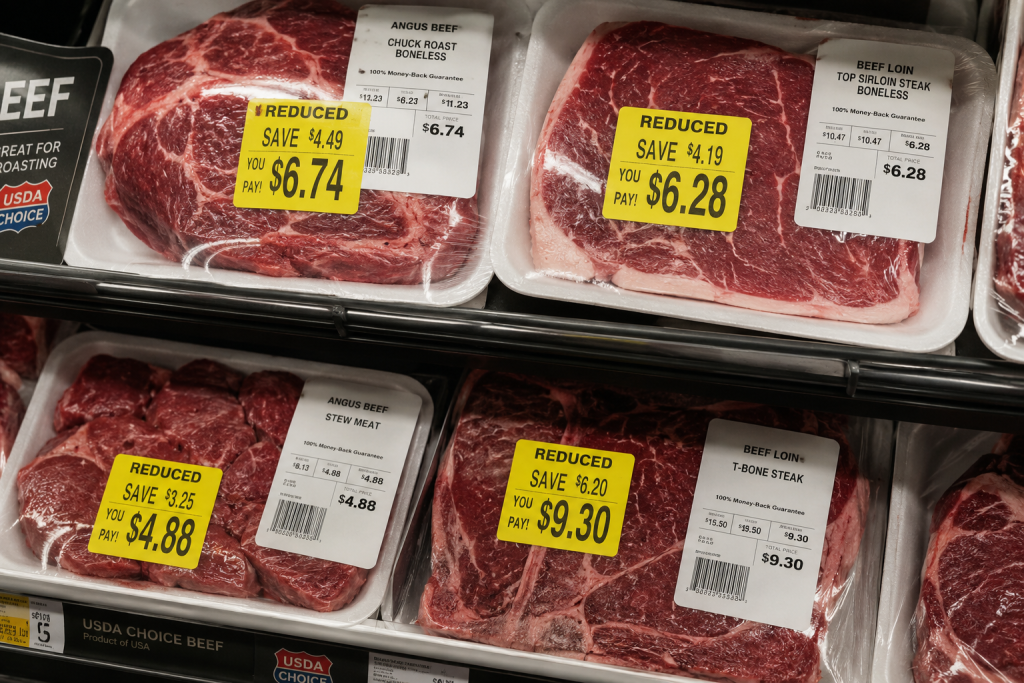
1. Shop the Manager’s Special Section First, Every Single Time
Every grocery store has one. It’s usually near the meat department or at the end of a refrigerated case. Look for yellow stickers, orange stickers, or a sign that says “Manager’s Special” or “Reduced for Quick Sale.”
These are items marked down 30 to 50 percent because they’re close to their sell-by date. That is not a problem. That is an opportunity.
Meat is the big one. Chicken, ground beef, pork chops – you’ll find them marked down significantly, and if you’re not using them tonight, you freeze them the same day you get home. Done. You just bought next week’s protein at half price.
Make this your first stop, not an afterthought. What’s marked down shapes the rest of your list.
2. Buy What’s Actually in Season Right Now

Late spring produce is some of the best and most affordable of the entire year. Here’s what’s in season right now and what you should be loading up on:
Strawberries: at their peak and priced much lower than in winter. Buy a flat if you can and freeze what you don’t eat fresh. They’re perfect in oatmeal, yogurt, or just on their own.
Asparagus: cheap in May, expensive by July. Roast it with olive oil and a little garlic. Simple and good.
Zucchini and yellow squash: just starting to come in and priced low. Saute, grill, or add to soups and pasta.
Snap peas and green beans: fresh and inexpensive right now. Eat them raw as a snack, steam them as a side, or toss them in a stir fry.
Cabbage: one of the most underrated budget vegetables all year. A whole head costs $2 to $3 and makes four or five servings. Slaw, stir fry, soups. It stretches.
When you buy in season, you spend less and the food actually tastes better. Both wins.
Tip:
Before you leave for the store, check the weekly ad online or on the store’s app. Most major grocery chains (Kroger, Publix, Aldi, Walmart) post their sales digitally. Spend five minutes before you make your list. Build at least 2 to 3 meals around what’s already on sale that week. This one habit alone can cut $15 to $25 off a typical grocery run.
3. Do a Full Pantry Check Before You Shop. Every Time.
Can I be honest with you for a second? Most of us buy things we already have. A second bottle of soy sauce. Another can of diced tomatoes when there are three in the back of the cabinet. More pasta when there’s already two half-open boxes sitting there.
Before you write your list, open your pantry, your fridge, and your freezer. What do you already have? What needs to be used before it goes bad? What protein is in the freezer that just needs vegetables and a starch to become dinner?
Build your list around what’s already there, then fill in the gaps. This alone will cut your grocery bill more consistently than almost anything else on this list.
For a deeper strategy on building meals around what you already have, check out my Spring Clean Your Pantry post. It has five specific meal ideas built from common pantry staples.
4. Try the Store Brand on Three Things This Trip
If you’re still buying name brand on most things, you’re paying a premium that adds up to hundreds of dollars a year.
The store brand on pantry staples is almost always the same quality as the name brand. Canned tomatoes, pasta, rice, oats, frozen vegetables, cooking oil, spices, cleaning products. These are all safe switches.
I’m not telling you to switch everything at once. Try three things on your next trip. If you like them, keep them. If one of them is a miss, go back to the name brand on that one thing. Most people find they don’t miss the name brand at all on the basics.
At $1 to $3 savings per item, switching even five or six pantry staples saves you $15 to $20 on a typical shop.
My Mantra
A grocery list is just a plan. And a plan, even a loose one, is always better than wandering the aisles and hoping for the best. Five minutes of planning before you shop saves you real money every single week.
5. Plan for Five Dinners, Not Seven
Planning every single dinner for a week sounds great in theory. In practice, life gets in the way. Someone invites you for dinner. You have leftovers that need to be used. You’re tired and you want soup from a can and that’s fine.
Plan five dinners. Leave two nights flexible. That flexibility keeps you from either wasting food you prepped or abandoning the plan entirely because it got too rigid.
Write your five meals down before you shop. Build your list from those meals. Stick to it. This is the simplest version of meal planning that actually works for real life.
6. Use Ibotta or Rakuten for Cashback on What You’re Already Buying

These are free apps and they pay you back on purchases you would have made anyway. That is free money.
Ibotta works at most major grocery stores. You browse offers before you shop, buy the qualifying items, and scan your receipt. Cash goes into your account. Typical savings run $5 to $15 per trip depending on what’s on offer.
Rakuten is better for online grocery orders or pickup orders through Instacart, Walmart, or Kroger. If you order groceries online at all, check Rakuten first.
Neither of these apps changes what you buy. They just give you a percentage back on what you were already going to buy. If you’re not using them, you’re leaving money on the table. Share them with your friends and you both save and maybe make a few extra dollars.
7. Buy Proteins in Bulk When They’re on Sale and Freeze Them
When chicken breasts go on sale for $1.79 a pound, don’t buy one package. Buy three or four. Freeze what you don’t use this week.
Proteins are your biggest grocery expense and the most flexible thing to freeze. Ground beef, chicken, pork, fish fillets, even shrimp all freeze well. Label everything with the date and what it is. Use within three months for best quality.
This habit alone — buying protein in bulk when it’s on sale rather than at full price when you need it — can save $20 to $40 a month for a household of one or two people.
8. Give Aldi a Real Try If You Haven’t Yet
I know. Some people have strong feelings about Aldi. But if you have one nearby and you’ve been avoiding it, it is worth one test trip.
Aldi’s store brand prices on produce, dairy, eggs, bread, and pantry staples run 20 to 40 percent lower than most traditional grocery stores. Their produce quality has improved significantly in recent years. Their specialty seasonal section (the middle aisle) has genuinely useful items at very good prices.
You won’t find every brand you’re used to. But for the basics that make up most of your cart? Aldi is hard to beat on price.
Bring quarters for the cart. Bring your own bags. And go with an open mind.
One More Thing: Track What You Actually Spend
IF YOU DON’T KNOW WHAT YOU’RE SPENDING ON GROCERIES, YOU CANNOT MAKE A REAL PLAN TO SPEND LESS.
This doesn’t need to be complicated. Keep your receipts for one month. Add them up at the end. Write that number down. Now you have a baseline.
Pick a target for next month that’s $20 to $30 lower. Use the strategies in this post. Check your number at the end of the month. Adjust.
That’s the whole system. Simple, honest, and actually doable.
If you’re ready to get a clearer picture of where your money is going overall, not just at the grocery store, my Money Leak Reset guide is a $9 printable that walks you through finding the spots where money is quietly slipping out every month. A lot of people are surprised by what they find. You can grab it here: MONEY LEAK RESET
One thing worth remembering: you don’t have to implement all eight of these strategies at once. Pick two. Do them consistently for a month. Then add one more. Slow and steady beats a big dramatic overhaul every single time. Small changes, done consistently, are what actually stick.
Your Grocery Bill Is Not Out of Your Control
YOU HAVE MORE POWER OVER WHAT YOU SPEND AT THE STORE THAN THE GROCERY INDUSTRY WANTS YOU TO THINK.
Prices are up. That part is real and it is frustrating. But your strategy matters. Shopping with a plan, buying in season, hitting the manager’s special section, and building meals from what you already have can realistically save you $40 to $80 a month. That’s $480 to $960 a year.
Not bad for a few habit changes.
Save this post. Bookmark it. Come back before your next grocery run.
Sign-up for the Boomer Buzz Newsletter for weekly savings tips for everyday spending, meal plnning, easy side hustles and more.
Watch those dollars, y’all,

P.S. You already know how to stretch a dollar. You’ve been doing it your whole life. This is just a reminder that those skills still work.
Come Join The Thrifty Boomers Facebook Group