
Fall Home Maintenance Tips: The One Chore That Can Help Save You Money
Fall Home Maintenance Tips: Start With This 15-Minute Check
Fall home maintenance tips usually start with the same familiar list. Every fall, the same chores start showing up. Rake the leaves. Clean the gutters. Put away the porch furniture. Check the smoke detectors. Drag out the fall decorations and wonder why on earth you own quite so many pumpkins.
All good things to do. But if saving money is high on your list this fall, there’s one little job I’d move closer to the top: check your home for air leaks and drafts before you start paying to heat the neighborhood.
It doesn’t require a whole Saturday. You don’t need to climb on the roof. And you may be able to find some of the easiest trouble spots in about 15 minutes. That makes this my kind of home-maintenance project.
MONEY-SAVING PERSPECTIVE
Some of the most worthwhile fall chores aren’t the ones that make your house look better when you’re finished. They’re the little jobs that can keep you from quietly wasting money month after month.
Disclosure: This post may contain affiliate links, which means I may receive a small commission if you make a purchase through my links — at no extra cost to you. I only recommend tools and products I personally use and trust.
Table of Contents
Drafty Doors and Windows Could Be Costing You Money
Start With the Places You Can Feel

If you’ve ever walked past a closed window on a cold day and thought, “Why can I feel a breeze?” you already know what I’m talking about. Air leaks allow the warm or cooled air you’ve paid for to escape while outside air works its way in.
Walk around your exterior doors and windows and look for cracked or missing caulk, worn weatherstripping, visible gaps, daylight around a closed exterior door, or areas where you can feel outside air coming through. Don’t assume every draft means you need new windows. Sometimes the problem is much simpler.
If you want to go beyond this quick check, ENERGY STAR’s Seal and Insulate guide shows where air leaks commonly hide and which fixes may be worth tackling.
Tip:
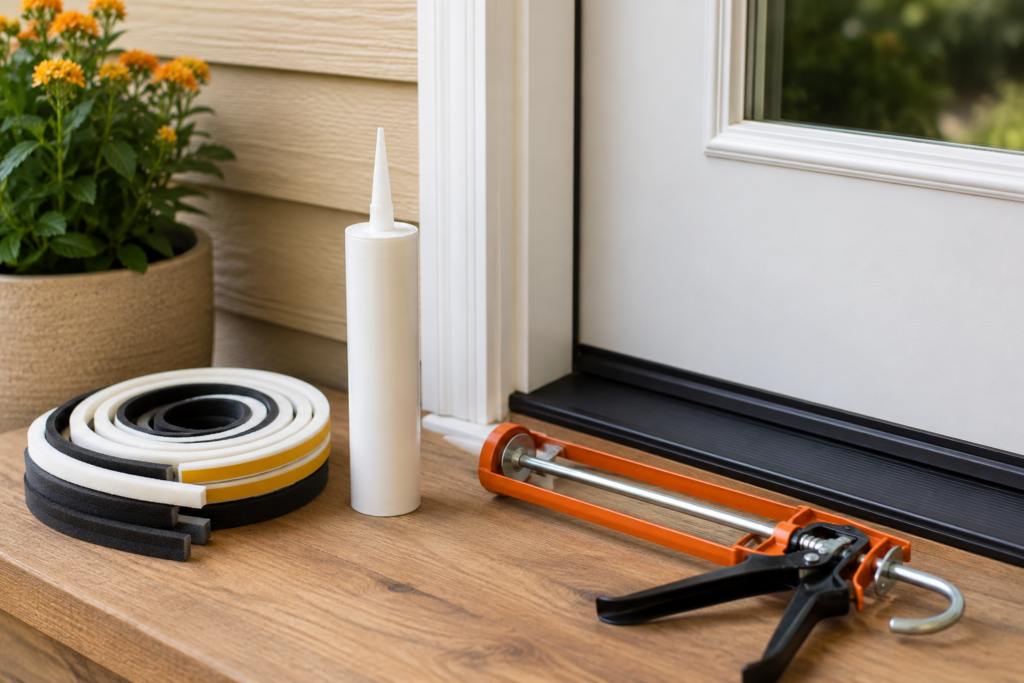
Don’t immediately start buying supplies for every door and window. Find the problem first. Weatherstripping is generally used around things that move, such as doors and operable windows, while caulk is generally used for cracks and gaps around stationary components.
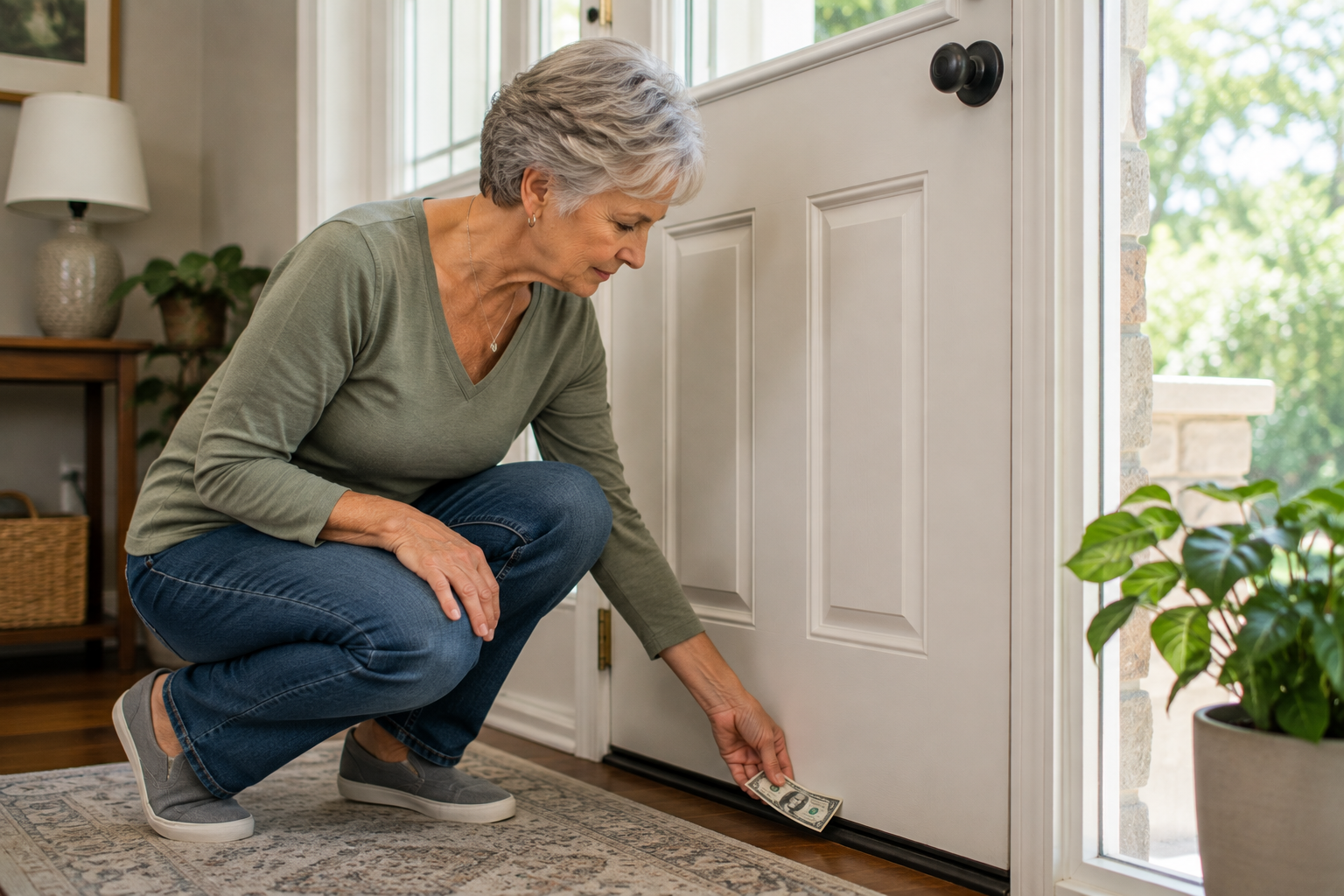
Try the Dollar Bill Test on Exterior Doors
Open an exterior door, put a dollar bill between the door and the frame, and close the door. Now gently pull the bill. If it slides out very easily, the seal in that spot may not be as snug as it should be. Try several points around the door.
This isn’t a professional energy audit. It’s simply a quick way to spot an exterior door that deserves a closer look.
Come Hang Out With Me on YouTube!

Every week I share easy-to-follow videos created especially for adults 55+.
You’ll find:
💰 Money-saving tips
📱 Simple technology tutorials
🛒 Smart shopping strategies
❤️ Real-life solutions for everyday living
🎬 Click below and subscribe!
👉 youtube.com/@boomersonabudget
Why Air Sealing Belongs on Your Money-Saving List
You’re Paying to Heat and Cool the Air Inside Your House
If I’m paying to heat or cool my house, I would prefer that expensive air to stay inside my house. Seems reasonable, doesn’t it?
Air sealing and insulation can improve energy efficiency and comfort, although actual savings vary by home and climate. That doesn’t mean five dollars’ worth of weatherstripping around one door is magically going to slash your electric bill. It does mean air leaks are worth paying attention to.
This is exactly why I like keeping little seasonal jobs on a schedule instead of trusting myself to remember them. If that sounds familiar, my Home Maintenance Calendar post gives you an easier way to keep track of what needs checking and when.
Small home expenses aren’t the only places money can quietly slip away. If you’re looking for more easy places to cut costs, I shared several more ideas in Save More Every Month.
The 15-Minute Fall Draft Check
Start With Your Three Most-Used Exterior Doors
Start with your front door, back or patio door, and the exterior door you use most often. Look at the weatherstripping. Check for visible gaps. See whether you can feel air around the edges. Try the dollar bill test in several places. If you find an obvious problem, make a note of it. That’s enough for today.
Tip:
You don’t need a whole weekend of home projects to make progress. Find one problem, fix what you safely can, and put the bigger jobs on your list for another day.
Then Check a Few Windows
If you have another five minutes in you, move on to windows in the rooms where you spend the most time. You don’t have to check 27 windows just because your house happens to have 27 windows. Start with the living room, bedroom and kitchen.
Think of this quick check as a starting point, not a complete home energy assessment.
Sign-up for the Boomer Buzz Newsletter for weekly savings tips for everyday spending, meal plnning, easy side hustles and more.
Know When This Stops Being a DIY Project
Some Air Leaks Need More Than a Tube of Caulk
I’m all for doing inexpensive little fixes ourselves when we safely can. But I’m also old enough to know that saving $20 is not worth falling off a ladder or crawling somewhere my knees have absolutely no intention of going.
If the problem appears to be in an attic, crawl space, ductwork or another difficult area, that may be the point where you call somebody who knows what they’re doing. We’re looking for the simple, obvious, safely fixable leaks first.

One Small Home Fix Can Keep Paying You Back
Of all the fall home maintenance tips I could give you, here’s what I like about this one. You do it once, and then you’re done for a while. You’re simply looking for places where money may quite literally be slipping through the cracks.
And that is really what being thrifty is about to me. Not doing without everything you enjoy. Not making yourself miserable to save seventeen cents. It’s noticing the little things that quietly cost you money and deciding whether they’re worth fixing.
That’s the same idea behind my Money Leak Reset. Some money leaks happen in our bank accounts. Some happen in our spending habits. And apparently, some are sneaking out around the back door.
If you like finding these small leaks before they quietly cost you more, that’s the whole idea behind my Money Leak Reset. It helps you look for the sneaky little places money disappears in your everyday spending, too.
So sometime this week, grab a dollar bill and check those exterior doors. Fifteen minutes. Three doors. One small place to start.
Talk Soon,

Come Join The Thrifty Boomers Facebook Group