

The Home Maintenance Calendar Every Homeowner Should Have
Stay ahead of home repairs and avoid costly surprises with a simple month-by-month plan
Your House Has a To-Do List, Whether You Write It Down or Not
Owning a home has a funny way of keeping us humble.
Just when you think everything is running smoothly, the air conditioner starts making a noise it definitely wasn’t making yesterday. Or you notice a little drip under the sink. Or you suddenly remember you haven’t changed that furnace filter since…well, let’s not talk about it.
The problem isn’t that we’re irresponsible homeowners. It’s that there are simply too many little things to remember.
And as we get older, I don’t know about you, but I’m less interested in keeping a running list of 47 household chores in my head.
That’s where a home maintenance calendar can help.
Instead of waiting until something breaks, you create a simple schedule that tells you what needs your attention throughout the year.
Home maintenance isn’t about keeping a perfect house. It’s about catching the little things before they become expensive things
Disclosure: This post may contain affiliate links, which means I may receive a small commission if you make a purchase through my links — at no extra cost to you. I only recommend tools and products I personally use and trust.
Why a Home Maintenance Calendar Can Save You Money
A few minutes of prevention today can help you avoid a much bigger repair bill tomorrow
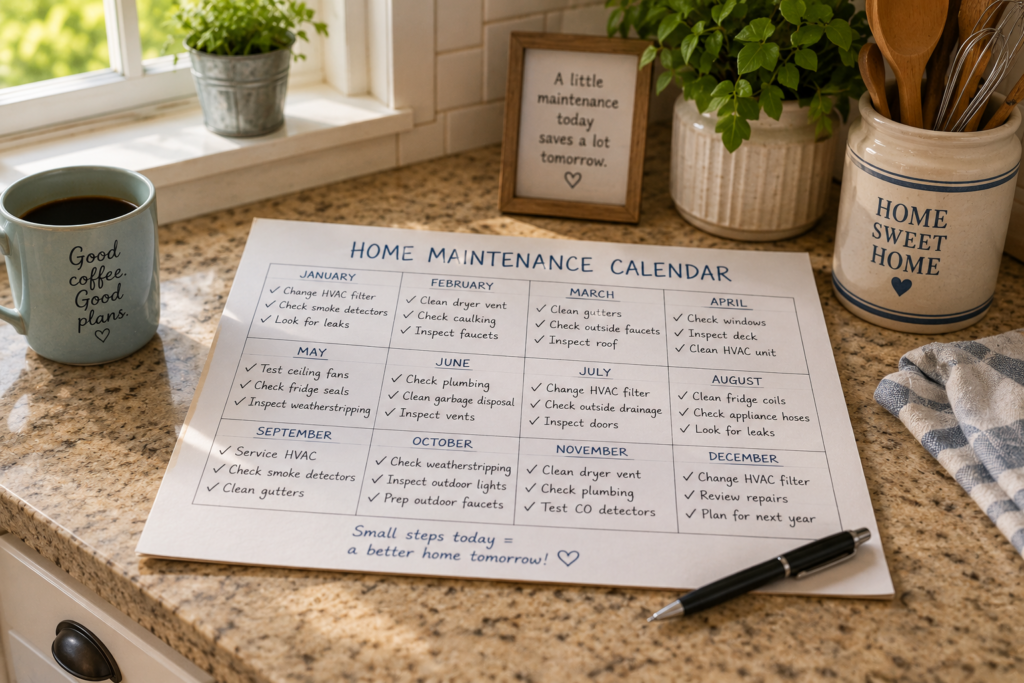
One of the most expensive ways to maintain a home is to wait until something stops working.
A clogged dryer vent can become more than an inconvenience. A tiny plumbing leak can quietly damage cabinets or flooring. An HVAC system that isn’t maintained may work harder than necessary and eventually leave you sweating in July or shivering in January.
Regular maintenance gives you a chance to notice problems while they’re still small.
That’s especially important when you’re living on retirement income, Social Security, part-time income, or simply trying to make your money stretch further.
A $20 fix is a whole lot easier to absorb than a $2,000 surprise.
And no, that doesn’t mean you need to crawl onto the roof or become your own electrician. Some jobs absolutely belong to professionals.
Your job is simply to know what needs checking and when.
Tip:
Walk through your home with your phone and take pictures of appliance model numbers, HVAC information, your water heater label, and anything else you may need later. Keep the photos in one folder called HOME INFO. If something breaks, you won’t have to crawl behind an appliance trying to find a model number.
Start With the Things That Need Regular Attention
Don’t try to remember the whole house. Start with the handful of jobs that repeat throughout the year.
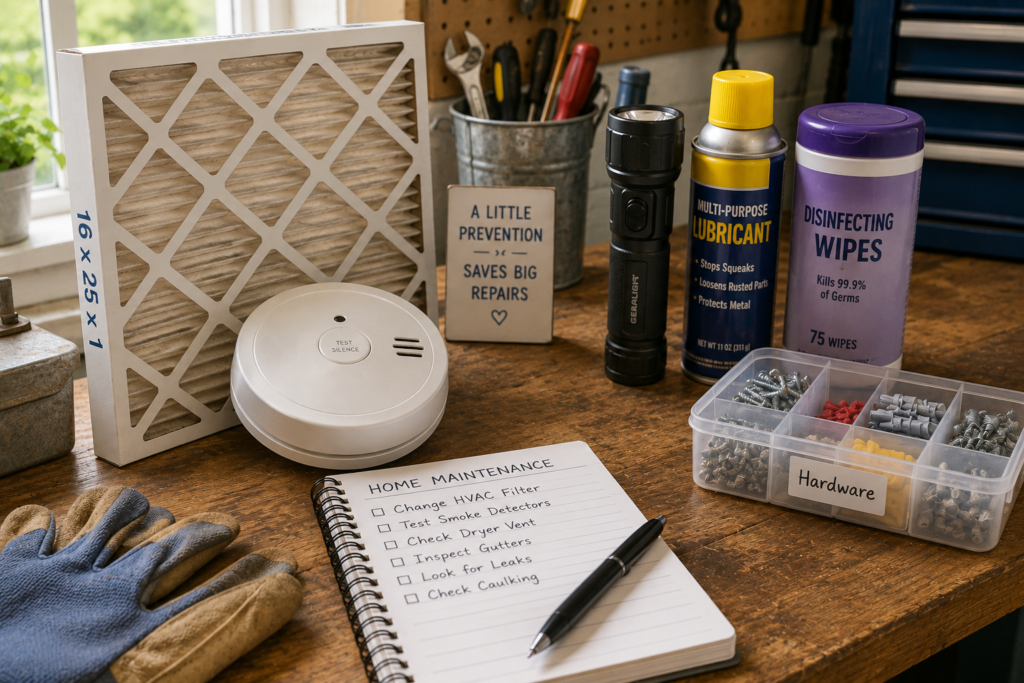
Before you build a month-by-month calendar, make a quick list of the systems and areas in your home that need routine attention.
That might include:
- HVAC filters
- Smoke and carbon monoxide detectors
- Dryer vents and lint buildup
- Plumbing leaks
- Gutters and downspouts
- Refrigerator coils and seals
- Water heater
- Exterior caulking
- Roof and shingles
- Doors and windows
- Pest control
- Outdoor faucets and hoses
- Ceiling fans
- Garbage disposal
- Major appliances
Your list won’t look exactly like your neighbor’s or mine.
Someone living in a condo won’t have the same maintenance needs as someone living in a 40-year-old house with a yard, gutters, and a garage.
And those of us in hot, humid climates may have a few different priorities than somebody dealing with snow and frozen pipes every winter.
Build the calendar around your home, not somebody else’s checklist.
Come Hang Out With Me on YouTube!

Every week I share easy-to-follow videos created especially for adults 55+.
You’ll find:
💰 Money-saving tips
📱 Simple technology tutorials
🛒 Smart shopping strategies
❤️ Real-life solutions for everyday living
🎬 Click below and subscribe!
👉 youtube.com/@boomersonabudget
Give Every Month a Few Simple Jobs
Spreading maintenance across the year keeps your list manageable and your Saturday from disappearing.
ou don’t need a giant spring cleaning weekend that leaves you wondering why you ever bought a house.
Spread the work out.
Here’s a simple example:
January
- Check smoke and carbon monoxide detectors.
- Replace HVAC filter if needed.
- Look under sinks for leaks.
- Review home repair priorities for the year.
February
- Clean dryer lint areas and inspect the vent.
- Check caulking around tubs and showers.
- Look for moisture around windows and doors.
March
- Check gutters and downspouts.
- Inspect outdoor faucets and hoses.
- Look around the exterior for winter damage.
- Schedule spring HVAC service if needed.
April
- Check screens and windows.
- Inspect decks, steps, railings, and porches.
- Clean around the outdoor HVAC unit.
May
- Test ceiling fans.
- Check refrigerator and freezer seals.
- Look for signs of insects or other pests.
- Inspect weather stripping around doors.
June
Inspect bathroom ventilation fans.
Check plumbing for slow leaks.
Clean garbage disposal and drains.

Keep Going Through the Second Half of the Year
A little attention each month means fewer forgotten jobs and fewer unpleasant surprises.
July
- Check HVAC filter.
- Inspect outdoor drainage after heavy rain.
- Check for moisture or mildew in humid areas.
- Look around doors and windows for gaps.
August
- Check appliance cords and hoses for visible wear.
- Clean refrigerator coils if accessible.
- Inspect sinks, toilets, and faucets for slow leaks.
September
- Schedule fall HVAC service if appropriate.
- Check smoke and carbon monoxide detectors again.
- Inspect exterior caulking.
- Clean gutters as leaves begin falling in your area.
October
- Check weather stripping around doors and windows.
- Inspect outdoor lighting.
- Prepare outdoor faucets for cold weather if needed.
- Look over porches, steps, and handrails.
November
- Clean dryer vent areas again.
- Check kitchen and bathroom plumbing before holiday guests arrive.
- Make sure flashlights and emergency supplies are easy to find.
December
- Check HVAC filter.
- Review repairs or maintenance that were postponed.
- Make a short home maintenance priority list for next year.
And here’s the important part:
This is not a commandment carved into stone.
Move things around.
If September is hurricane-prep month where you live, make that the priority. If snow arrives in October where you live, winterize earlier.
The calendar should work for your house, your climate, your budget, and your physical abilities.
Tip:
A well-maintained home isn’t one where nothing ever breaks. It’s one where you pay attention, handle what you can, plan for what you can’t, and ask for help when you need it.
Know Which Jobs You Should Not Do Yourself
Saving money doesn’t mean risking your health to avoid paying somebody else.

This matters more as we get older.
There was probably a time when many of us would drag out a ladder, climb onto the roof, clean the gutters, trim a tree limb, paint the shutters, and still have enough energy left to cook supper.
These days?
I am perfectly comfortable letting somebody younger have that adventure.
There is nothing frugal about saving $150 on a service call and ending up with a medical bill because you fell off a ladder.
Consider hiring help for jobs involving:
- Roof work
- Tall ladders
- Electrical systems
- Major plumbing
- Gas appliances
- Heavy lifting
- Tree trimming
- Anything that makes you feel physically unsafe
You can still save money by getting multiple quotes, asking neighbors for trusted recommendations, and bundling several small jobs into one handyman visit.
Sign-up for the Boomer Buzz Newsletter for weekly savings tips for everyday spending, meal plnning, easy side hustles and more.
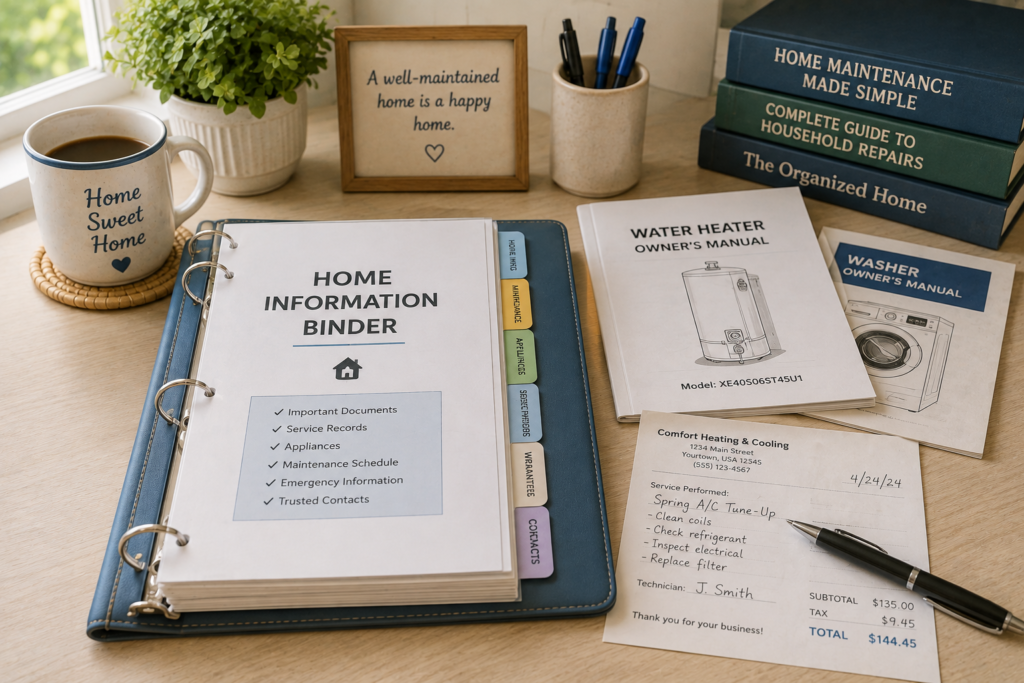
Keep Your Home Maintenance Information in One Place
The calendar tells you when to do it. Your records tell you what was done, who did it, and what comes next.
This is where a maintenance calendar becomes even more useful.
When you have your HVAC serviced, write down the date.
When you replace the water heater, record the model, purchase date, warranty information, and installer’s contact information.
When you finally find a plumber you trust, keep that person’s number somewhere you can actually find it.
You don’t want to be standing in your kitchen with water spreading across the floor while you’re searching through three years of text messages trying to remember the plumber’s name.
This is also where my Home Information Binder can help. It includes a Home Maintenance section for keeping routine care, appliances, and service history together, along with a Trusted Service Provider Directory and an Annual Review checklist.
If you’d rather have one place to keep your home maintenance records, appliance information, trusted service providers, emergency information, and other important household details, my Home Information Binder was designed to help you do exactly that.
Don’t Let the Calendar Become Another Chore
The best maintenance system isn’t the prettiest one. It’s the one you’ll actually use.
Your calendar can be paper.
It can hang inside a cabinet door.
It can live in your household binder.
You can put recurring reminders in your phone.
You can even write twelve months on a piece of notebook paper and tape it inside the pantry.
Fancy is optional.
Remembering is the goal.
If you miss something in April, move it to May.
If your budget won’t allow a repair this month, write it down and start setting aside what you can.
The calendar isn’t there to nag you.
It’s there so your brain doesn’t have to keep remembering everything.
And that alone can make homeownership feel a little lighter.
Bookmark this post or print your own monthly list so you can come back to it as the seasons change.

Take Care of the House That Takes Care of You
Small, steady attention can protect both your home and your budget for years to come
For most of us, our home is one of the biggest investments we’ll ever own.
But it’s more than an investment.
It’s where we drink our morning coffee. It’s where the family gathers. It’s where we’ve celebrated birthdays, survived hard seasons, laughed until we cried, and probably accumulated entirely too much stuff in at least one closet.
Taking care of it doesn’t have to consume your life.
A simple home maintenance calendar gives you a plan.
One month.
A few little jobs.
Then move on with your life.
Because at this stage of the game, I think we’ve earned the right to spend a little less time worrying about what we’re forgetting and a little more time enjoying the home we’ve worked so hard for.
Talk Soon,

Come Join The Thrifty Boomers Facebook Group







One Comment
Comments are closed.